
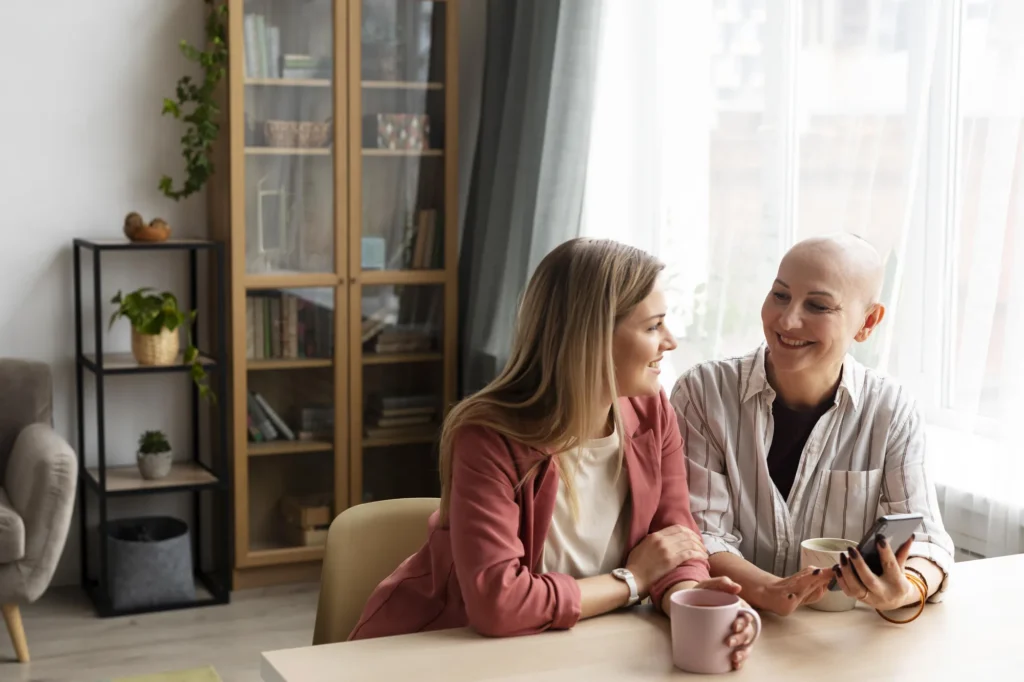
Losing your hair during cancer treatment can feel deeply emotional – like another piece of yourself is being asked to adapt. Although it may not seem serious compared to coping with cancer – and it’s likely to be temporary – hair loss is about far more than appearance. It can feel deeply confronting; touching identity, privacy, control, and how safe you feel in your own body.
If you’re navigating this experience, you are not alone – and your feelings make sense.
Why hair loss can hurt so much
Hair often carries deep personal meaning. It can be tied to gender expression, culture, spirituality, confidence, and how you present yourself to the world. When treatment causes hair to fall out, many people describe it as a visible marker of illness – something that announces cancer before they’re ready to talk about it.
Common emotional responses include:
- shock or disbelief when clumps of hair begin to fall out
- grief, as if you are losing a part of who you are, not “just hair”
- anxiety or self-consciousness about being seen as “the cancer patient”
- a sense of lost privacy or control.
Acknowledging these feelings doesn’t make you shallow or weak – it makes you human.
What to expect during hair loss
Understanding the process can offer a sense of control. With radiotherapy, hair loss can happen during or just after treatment. Chemotherapy-related hair loss usually begins 2–4 weeks after treatment starts. It may happen gradually or come out in clumps, and can affect scalp hair as well as eyebrows, eyelashes, and body hair.
You might notice:
- tingling or tenderness of the scalp before shedding
- increased vulnerability as hair loss becomes a constant reminder of treatment
- a second wave of adjustment when hair starts to regrow, sometimes with a different texture, colour, or curl.
Knowing that regrowth is likely does not erase the pain of losing it now. Two things can be true: this is hard, and it is also not forever.
Coping emotionally: giving yourself permission
One of the kindest things you can do is allow your feelings without judgement. Sadness, anger, fear, numbness, or even relief are all valid responses.
Helpful supports include:
- naming what you’re feeling to reduce shame and self-criticism
- talking with someone who can listen without trying to “fix” it – a counsellor, support group, oncology social worker, or trusted friend
- seeking professional mental health support if anxiety or low mood begins to interfere with daily life.
If children are part of your world, they may also have questions or worries. Honest, age-appropriate conversations can help reduce fear and build connection.
Above all, remember: caring about your hair does not mean you are shallow or not “strong enough”. It means you are human.
Practical ways to reclaim control
Making small, intentional choices around hair loss can restore a sense of agency, and help support you through something you didn’t choose.
- prepare ahead by asking your care team what to expect
- consider proactively cutting or shaving your hair when shedding starts, if that feels empowering
- explore wigs, scarves, hats, or going bare. Many cancer organisations offer guidance and styling tips so you can choose what feels most like you
- create soothing rituals, such as gentle scalp care or a comforting bedtime routine.
Be gentle with yourself. This is a big emotional milestone during treatment.
Staying connected to who you are
When the reflection in the mirror changes, it’s easy to forget that your core self remains intact. Your humour, values, love, and creativity have nothing to do with your hair.
Many people find strength in connecting with others who understand this experience. Shared stories can ease isolation and remind you that hair loss is a chapter – not the whole story.
Your hair may come and go, but your worth does not change.
To learn more, visit Look Good Feel Better – Facing Cancer with Confidence and Hair loss | Cancer Council.
