
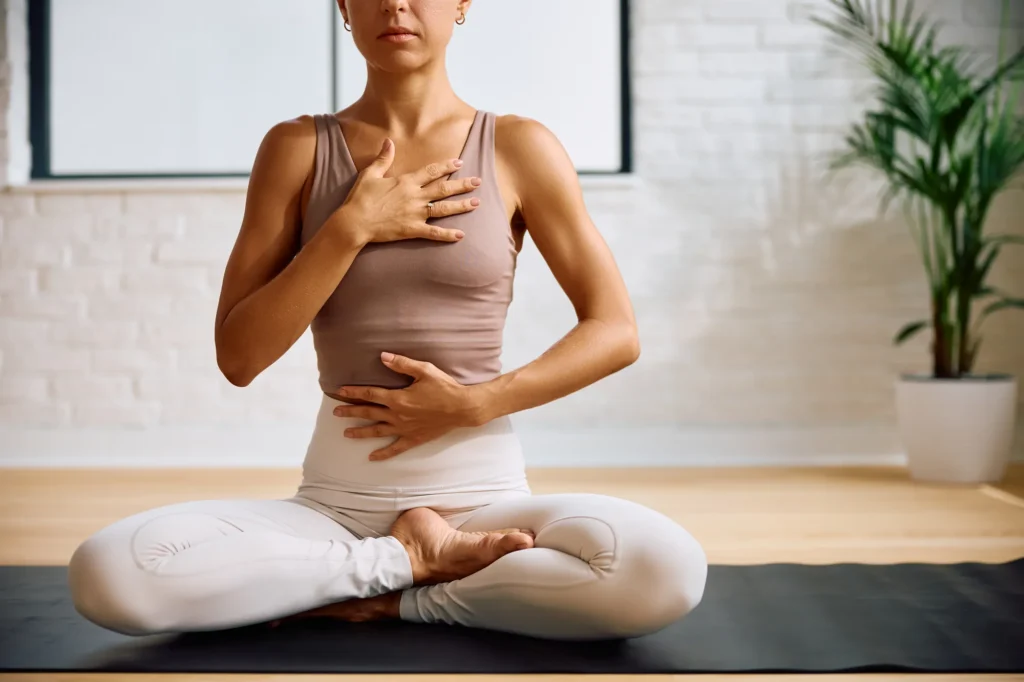
Breathwork is the practice of intentionally using your breath to soothe the mind and support the body. It’s free, safe, and adaptable for almost anyone – making it especially helpful for those navigating cancer treatment.
How it helps
During stress or illness, our breathing often becomes shallow and quick. Breathwork gently restores balance by slowing the breath and activating the body’s natural relaxation response. This shift can ease tension, lower heart rate and blood pressure, and calm the nervous system.
With regular practice, breathwork can improve sleep, mood, and resilience – all essential for coping with the physical and emotional challenges of cancer. During treatment, it can help reduce anxiety before procedures, ease fatigue, and support recovery. Breathwork also nurtures a deeper connection to your body, helping you notice and respond to stress earlier, and offering a comforting sense of control when so much feels uncertain.
Getting started
Examples of simple breathwork techniques include:
Diaphragmatic breathing (deep belly breathing)
Sit or lie down comfortably. Place one hand on your chest and the other on your belly. Breathe in slowly through your nose, letting your belly rise. Pause briefly, then exhale slowly through pursed lips, letting your belly fall. Keep the chest as still as possible.
How it helps
This technique helps calm the nervous system, reduce stress hormones, improve oxygen flow, and support the lymphatic system. It can ease pain, fatigue, breathlessness, nausea, and emotional distress – making it a powerful tool during and after cancer treatment.
Box breathing (4-4-4-4 breathing)
Inhale through your nose for 4 seconds, hold your breath for 4 seconds, exhale through your mouth for 4 seconds, then hold again for 4 seconds. Repeat in a slow, steady rhythm.
How it helps
Box breathing brings structure and calm to your breath. It helps reduce anxiety, regulate stress, lower inflammation, and support emotional balance. It’s easy to do anywhere – especially helpful before appointments or during difficult moments.
Alternate nostril breathing (Nadi Shodhana)
Sit comfortably. Use your fingers to gently close one nostril. Inhale slowly through the open nostril, pause, then switch sides to exhale through the other nostril. Continue alternating, using slow, even breaths.
How it helps
This practice balances the nervous system, lowers stress, improves focus, and supports better sleep. It can also help regulate heart rate, reduce fatigue, and bring a sense of clarity – ideal for grounding during times of uncertainty.
Breathing exercises don’t need to take long – even five minutes a day can make a difference. Guided sessions (either in person or online) can be useful at first to learn the right techniques. The most important part is consistency: gentle, regular practice brings the greatest benefit.
