
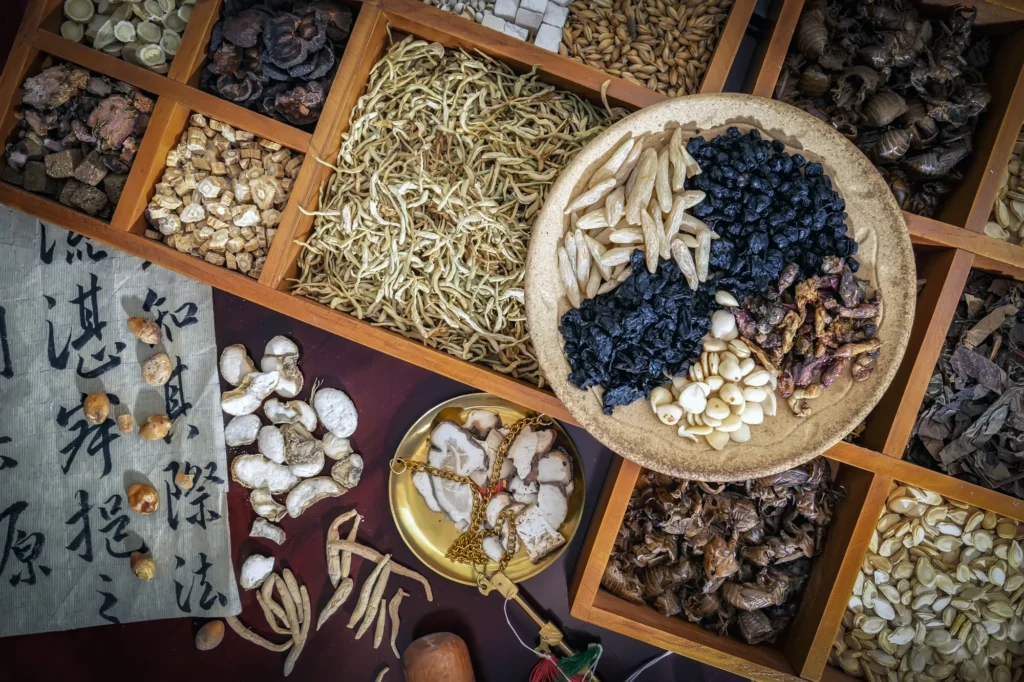
Chinese herbal medicine is part of the broader system of Chinese medicine, alongside acupuncture, Qi Gong, and Tai Chi. It uses carefully selected plant parts – roots, leaves, stems, flowers, and seeds – combined into personalised formulas that can be taken as tea, granules, capsules, or pills.
How it helps
Chinese herbal medicine supports the whole person – physically, emotionally, and energetically – by helping restore balance and harmony within the body. After a personalised assessment, a practitioner will tailor a combination of herbs to strengthen resilience, support digestion and energy, and reduce inflammation.
This approach can help ease symptoms such as fatigue, nausea, digestive changes, poor appetite, sleep difficulties, and anxiety.
Getting started
Herbal medicine is powerful and must be used carefully. Open communication with your oncology team is vital to ensure herbs do not interact with other more traditional treatments. They can also help you find a registered practitioner who has experience in oncology care.
