
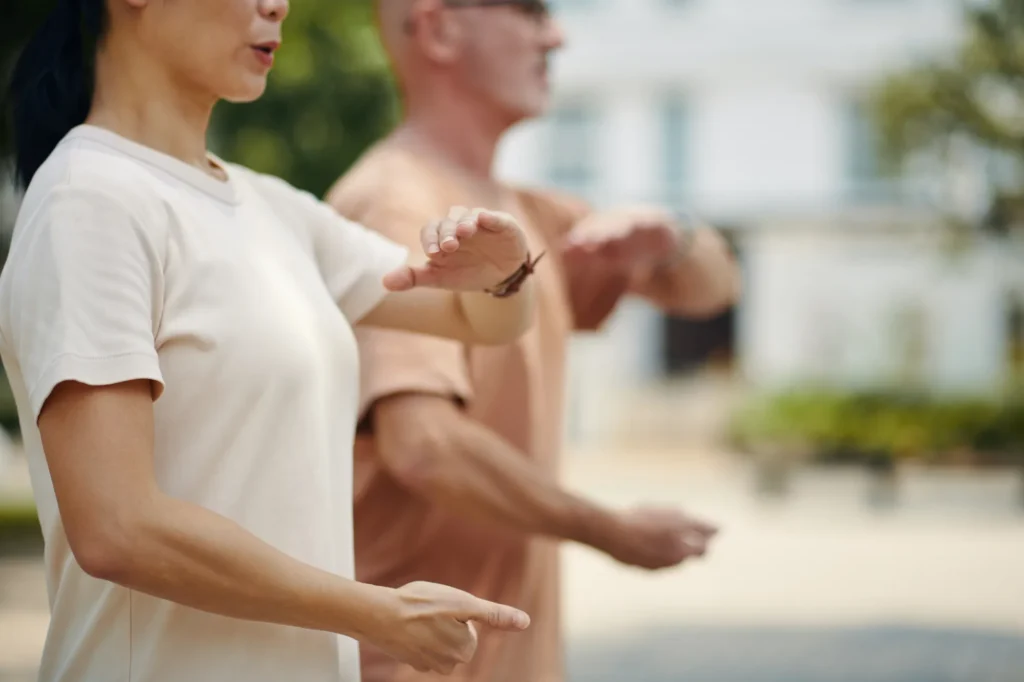
Tai Chi is a traditional Chinese mind–body practice that combines slow, flowing movements with deep breathing, gentle stretching, balance, and meditation. Rooted in martial arts and traditional medicine, it helps harmonise body and mind, support circulation, and nurture overall wellbeing.
How it helps
For people affected by cancer, Tai Chi can improve balance, flexibility, mobility, and cardiorespiratory health, while easing fatigue, sleep difficulties, anxiety, and low mood. Practicing in a group can also offer social connection and support, making Tai Chi a holistic way to care for both physical and emotional health.
Getting started
Tai Chi is usually taught to cancer patients in small group sessions or one-on-one by qualified instructors, often 2–3 times per week for 8–16 weeks. Check with your local cancer centre for details.
You can also practice at home with guidance from videos or written materials, adjusting intensity to your energy and physical capacity.
