
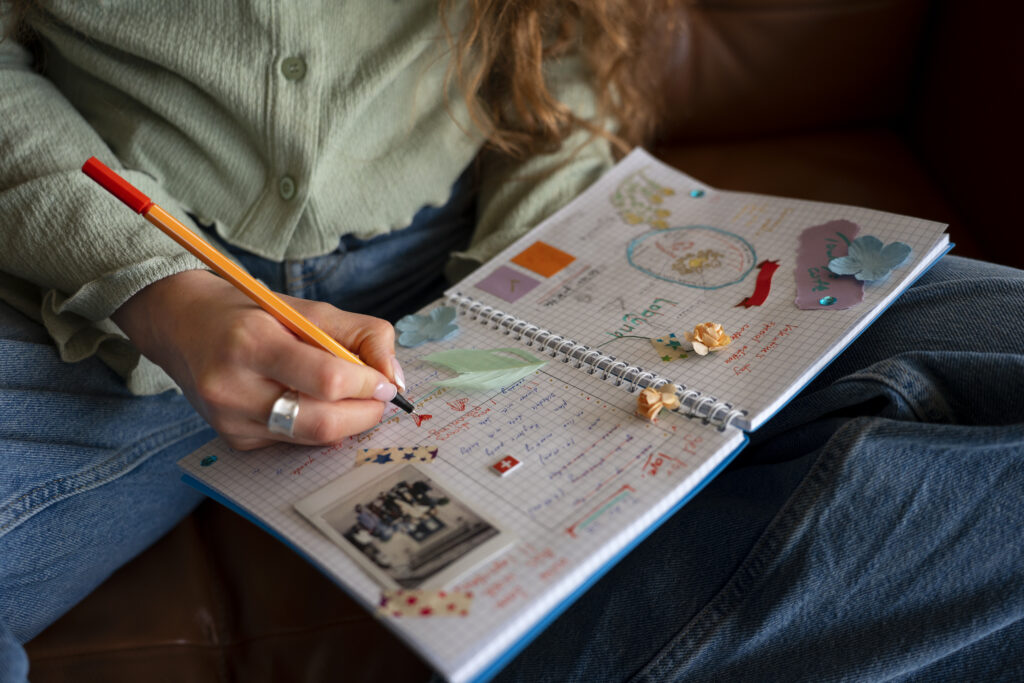
Journalling is more than simply writing things down. It’s a safe space to express emotions, process fears, and reflect on experiences. By tuning in to what’s really going on inside and putting your thoughts or feelings into words, you can untangle emotions and make sense of your experiences with greater clarity.
Why journalling helps
Research shows journalling can reduce stress, improve mood and sleep, and help you process difficult experiences with greater self-awareness. Putting your emotions into words can help you make sense of what seems senseless, find meaning in difficult experiences, and reshape how you relate to your situation.
Here are some other ways journalling can support your emotional wellbeing:
- naming your emotions helps calm them. Putting words to how you feel reduces their intensity, quiets the brain’s stress response, and helps you regain a sense of control
- organising your thoughts improves communication. Journalling can help you identify your needs and emotions. You can then communicate them to your loved ones and healthcare providers, so they can support you better
- writing about fears and hopes helps with uncertainty. Truthful reflections on how you feel helps to create a sense of control and direction, allowing you to process what’s happening more calmly.
Types of journalling
There are several journalling styles that can support people affected by cancer, including:
- expressive writing to explore emotions and thoughts about your experience
- reflective journalling to make sense of what happened to you
- gratitude journalling to focus on small or large things you’re thankful for
- symptom tracking to record physical changes and treatment side effects.
How to get started
- Decide on a regular time to journal for 10-15 minutes, a few times a week if possible.
- Find a space where you feel comfortable and won’t be interrupted.
- Have your journal, paper or laptop ready; whatever method works for you.
- Write whatever comes to mind! It doesn’t need to be spelt perfectly or even make sense to anyone else but you – it simply needs to be honest.
Journal prompts
If you’re unsure what to write, prompts can provide some direction to get you started. Here are some examples.
Emotions
- “Today, my heart feels…”
- “One emotion I want to release right now is…”
- “What is weighing on me, and what would help lighten it?”
Strength
- “A moment where I surprised myself today was…”
- “I am proud of myself for…”
- “Even though things are hard, I am still…”
Hope
- “Right now, what is one thing bringing me peace?”
- “A small joy I noticed today was…”
- “Something I’m looking forward to is…”
Processing the hard days
- “What felt difficult today?”
- “What brought me comfort today?”
- “What is one thing I wish others understood about today?”
My Journey Wellness Journal
Inspired by the late Jemma Juckes, this wellness journal offers you a place to pause, breathe, reflect, and begin again – no matter where you are on your journey.
